
Best Beds for Seniors With Mobility Issues
Getting in and out of bed is one of the most physically demanding transfers elderly people make every single day — often multiple times. For someone with Parkinson's, arthritis, hip or knee problems, or post-surgical weakness, the wrong bed makes that transfer harder and riskier. The right bed makes it significantly easier and safer.
The Single Most Important Factor: Bed Height
Before any discussion of adjustable bases or specialized mattresses — bed height. The ideal height for an elderly person is 20 to 23 inches from floor to mattress top, which roughly corresponds to the back of the knee when standing. A bed that's too low requires significant leg strength and momentum to rise from. A bed that's too high creates a fall risk when sitting on the edge with feet that don't reach the floor.
Many families don't realize the bed they've had for twenty years is at the wrong height. Before buying anything new, measure the current bed. Bed risers ($20-40) can raise a low bed quickly. Get the height right first.
The Case for Adjustable Bases
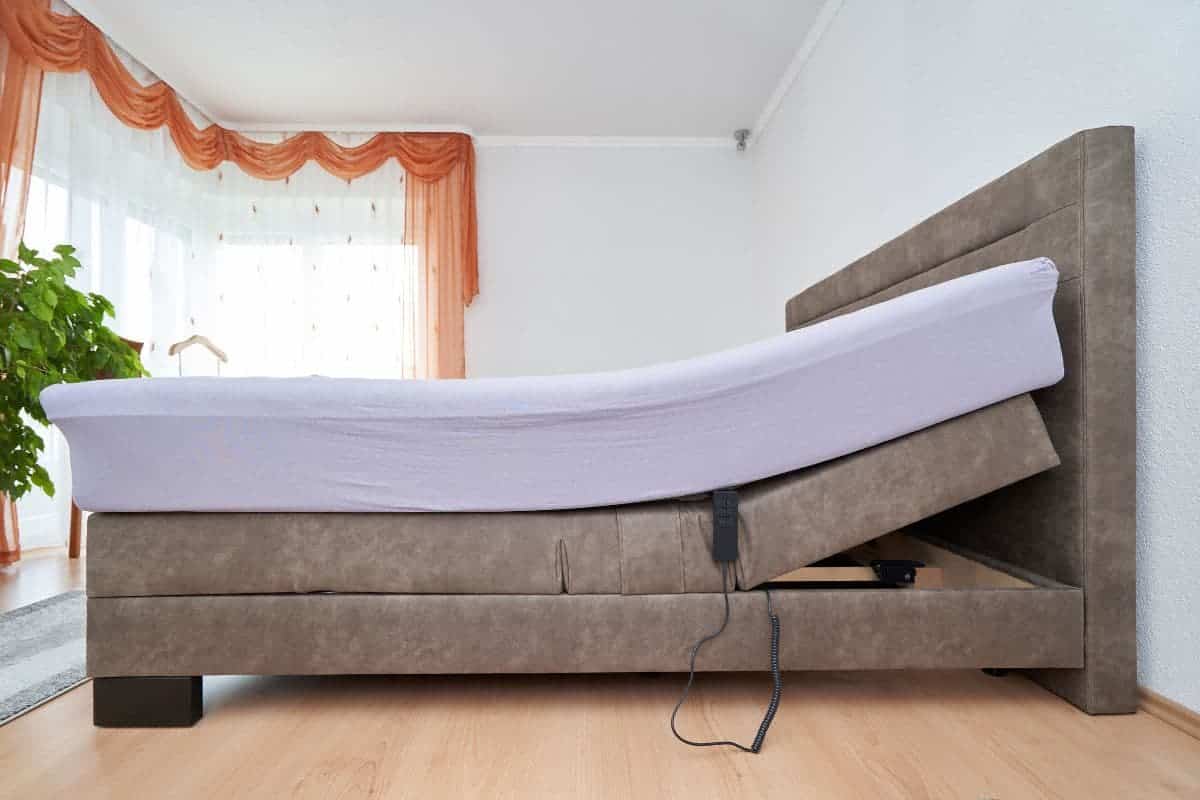
An adjustable bed base changes the entire getting-up equation. Instead of having to push from flat to upright using arm and core strength, the person raises the head of the bed electrically — sitting partially upright before their legs ever go over the side. For someone with significant weakness, this is often the difference between needing a caregiver for every transfer and being able to manage independently.
Top Picks
Best Overall: Sven & Son Platinum Series Adjustable Bed
Head articulates to 75 degrees, foot to 46 degrees, adjustable leg height, wireless remote, under-bed lighting, and an 800-pound weight capacity. The adjustable leg height is particularly valuable — it lets you set the bed at the right transfer height. The under-bed lighting addresses the nighttime navigation problem that contributes to falls.
Best Value: iDealBed 3i Custom Adjustable Base
Compatible with any mattress, 850-pound capacity, head and foot articulation, and programmable position memory — meaning the user can save their preferred positions and return to them with one button push. This matters for someone with cognitive decline or limited dexterity. A quiet motor is also a real feature; a noisy adjustable base at 3am disrupts sleep quality.
For Those Who Don't Need a Full Adjustable Base
A good bed rail and trapeze bar combination can dramatically improve safety and independence without the cost of a new base. The Stander Safety Bed Rail slides between mattress and box spring, provides a firm grip point for transfers, and folds flat when not needed. A bed trapeze bar suspended above the center of the bed gives a person something to grab and pull against when sitting up. Together these two items cost under $150 and address the most common getting-in-and-out-of-bed problems.
The Mattress Matters Too
A mattress that's too soft makes it harder to get up — the person sinks in and has less to push against. A medium-firm mattress provides better transfer support while still offering pressure relief. Memory foam alone can be problematic for someone with significant weakness; a hybrid mattress with coil support and foam top often works better.
Get the height right. Add the rails. Consider an adjustable base if transfers are a significant daily challenge. These are not luxury items — they're the difference between independence and needing help for the most private moments of the day.
Chip Mitchell spent over 10 years owning and operating a home care company in Northwest Georgia. He currently cares for his father-in-law, PawPaw, who has lived with Parkinson's Disease for 20 years.

About Chip Mitchell
Chip Mitchell is the founder of Growing Gray USA. With over a decade of experience owning a home care company, he has helped hundreds of families navigate the complexities of caring for aging parents.
Read full bio →

