Make a Bedroom Safe for the Elderly

Most bedroom falls happen at night. Not because the bedroom is particularly dangerous in daylight, but because a parent gets up at 2am to use the bathroom — half asleep, in the dark, in a room they know well but can't see — and something catches their foot or they misjudge the distance to the wall or the floor is slippery. The modifications that matter most address that specific scenario.
Lighting — The Highest-Return Modification
Motion-sensor night lights along the path from the bed to the bathroom. Under-bed lighting that activates when someone sits up. A touch light on the bedside table within easy reach. These three things together cost under $50 and address the most dangerous moment in the bedroom — the first few steps in the dark at 3am. Install them before anything else.
Bed Height and the Transfer Zone
The bed should be 20 to 23 inches from floor to mattress top — roughly knee height when standing. Too low requires too much strength to rise from. Too high creates a fall risk when sitting on the edge with feet that don't reach the floor. Check the current height and adjust with risers or a different frame if needed.
The area beside the bed where a parent stands to get up and down is the transfer zone. It needs to be completely clear — no furniture legs to catch, no cords, no shoes, no pets.
Eliminate Throw Rugs Completely
Every throw rug in the bedroom goes. No exceptions. For a parent with Parkinson's shuffling gait or reduced foot clearance, a rug edge in the dark is a serious fall risk. If the floor needs traction, use non-slip socks or slippers with non-skid soles, not rugs.
Walking Aids — Positioned Where They'll Actually Be Used
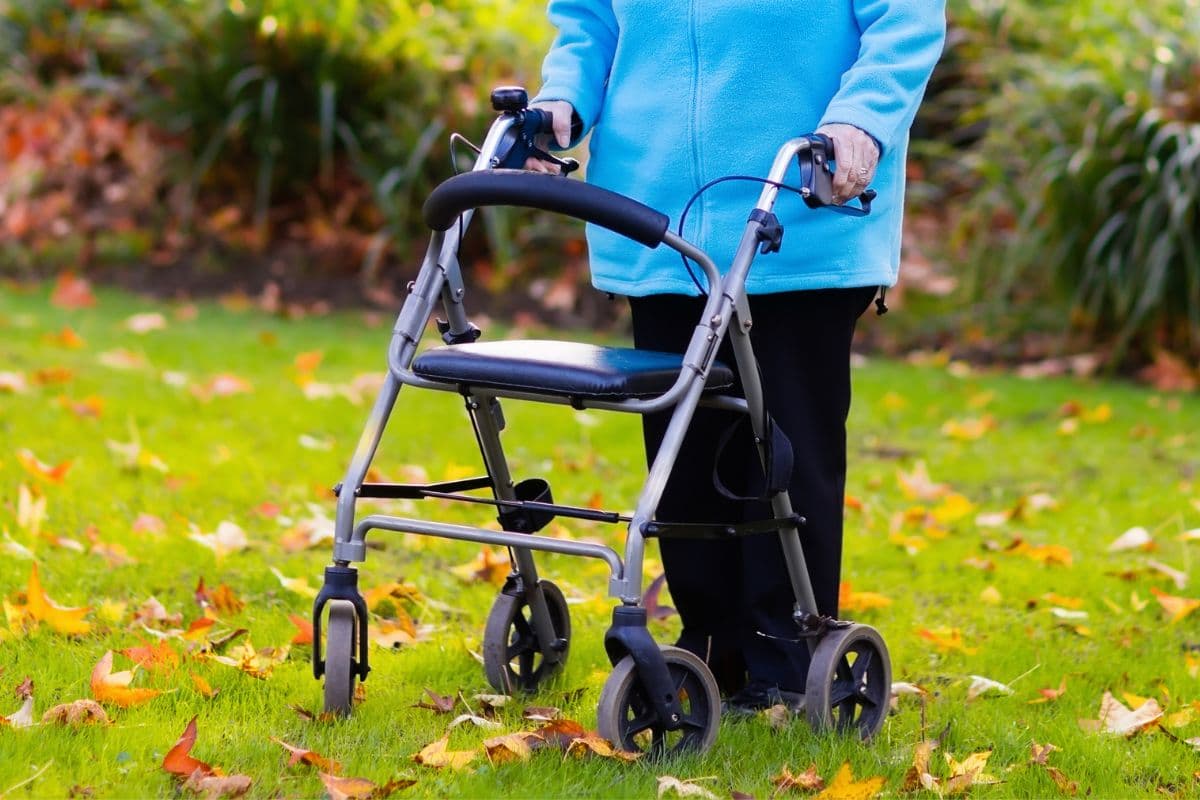
A walker on the other side of the room is functionally not there when someone is getting up at 2am. Place it at the transfer zone where it can be grabbed without taking unsupported steps first. If your parent bypasses it anyway, at least you've removed one barrier to using it.
A Bed Rail or Grab Bar at the Transfer Point
A half rail or sturdy bed handle mounted at the exit side of the bed gives a parent something solid to push against when rising. The Stander Safety Bed Rail, which slides between mattress and box spring, is the most practical option for most home setups. This is different from full side rails — it's a grip point at the specific moment of maximum vulnerability, not a containment device.
Consider a Bedside Commode for Nighttime
The most dangerous journey in the bedroom is the one to the bathroom at night. If your parent gets up multiple times overnight, a bedside commode eliminates that journey entirely. The dignity issue is real and should be handled sensitively. But a fall on the way to the bathroom at 3am ends independence faster than any commode does.
A Fall Mat Beside the Bed
A high-density foam fall mat on the floor beside the bed — the side your parent exits from — reduces injury severity if a fall does occur. Not every fall is preventable. Reducing its consequences is part of a complete safety plan.
Chip Mitchell spent over 10 years owning and operating a home care company in Northwest Georgia. He currently cares for his father-in-law, PawPaw, who has lived with Parkinson's Disease for 20 years.

About Chip Mitchell
Chip Mitchell is the founder of Growing Gray USA. With over a decade of experience owning a home care company, he has helped hundreds of families navigate the complexities of caring for aging parents.
Read full bio →