When Elderly Parents Leave the Stove On
The stove was where Sally's situation became impossible to ignore. She'd been managing on her own on Saddle Mountain — her independence, her cats, her wine — but the stove was a live risk that her caregiver watched closely every shift. Not because Sally was careless, but because dementia and an unsupervised gas burner are a combination that doesn't announce itself before it becomes a crisis.
Leaving the stove on is one of the most common and most dangerous signs that an elderly parent needs more support than they're currently getting. Here's what to do about it.
Start With Automatic Shut-Off
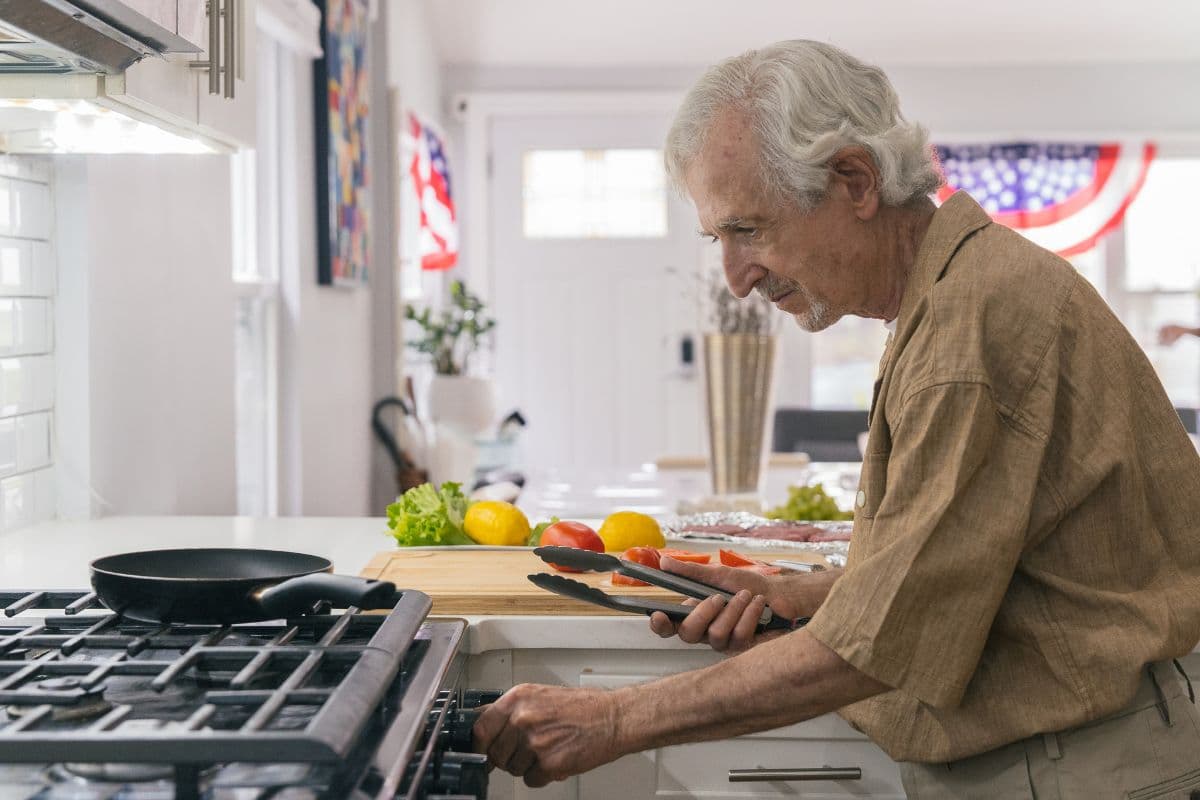
Products like Stove Guard and iGuard Stove mount over the existing stove and monitor movement in the kitchen. If no motion is detected for a set period while a burner is on, the device shuts the stove off automatically. These cost $150 to $300 and directly address the specific risk of a burner left on while the person wanders away or falls asleep. For a parent with early to moderate cognitive decline who still wants to cook, this is the first thing to install.
Consider Switching to Induction
Induction cooktops don't produce open flame and the surface itself stays cool — only the cookware heats up. If a parent rests their hand on a burner they believe is off, nothing happens. Many models have built-in auto-shutoff when cookware is removed. For a parent who is still physically capable of cooking but whose judgment has become unreliable, the absence of an open flame removes a significant category of risk.
Install Smoke Detection That Actually Works
A smoke detector in the kitchen tested monthly and a lightweight fire extinguisher mounted on the wall — visible, accessible, not stored in a cabinet. The detector and extinguisher exist for the moment when everything else fails. They are not optional.
The Harder Conversation — When Cooking Has to Stop
There is a point in dementia's progression when independent stove use is no longer safe regardless of what devices are installed. The signals: leaving burners on repeatedly despite reminders and auto-shutoff, inability to remember that the stove is hot, burning food regularly, or fire incidents that were caught before they spread.
When that point arrives, the stove needs to come out of the picture. The circuit breaker can be switched off. The gas line can be shut. Meals can come from a caregiver, a meal delivery service, or a microwave. Sally's caregiver was in the house specifically because of situations like the stove. The modifications only go so far. At some point, supervision is the modification.
Chip Mitchell spent over 10 years owning and operating a home care company in Northwest Georgia. He currently cares for his father-in-law, PawPaw, who has lived with Parkinson's Disease for 20 years.

About Chip Mitchell
Chip Mitchell is the founder of Growing Gray USA. With over a decade of experience owning a home care company, he has helped hundreds of families navigate the complexities of caring for aging parents.
Read full bio →